At the offline stations on production lines for motors, bearings, fans, and pump bodies, a master craftsman with over a decade of experience places his ear close to the rotating components, listens for three seconds, and then says, “This unit has an unusual sound—it’s not okay.”
He’d probably be unable to answer—because while the human ear can detect “something’s wrong,” it’s hard to quantify precisely “what’s wrong.”
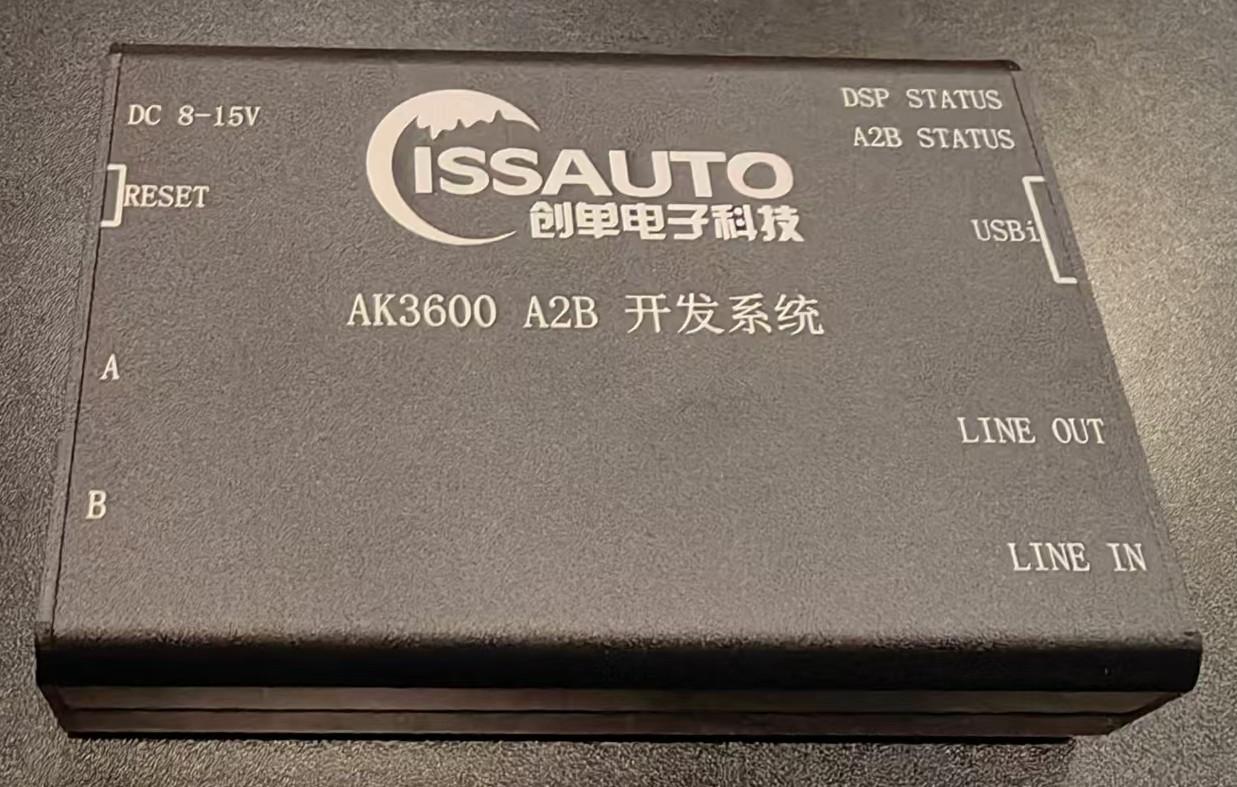
This is precisely the root cause why industrial acoustic quality inspection has long been stuck in “manual sampling”: subjective, non-reproducible, and non-traceable. Shanghai Chuangdan Electronic Technology Co., Ltd. (a high-tech enterprise founded in Shanghai in 2015) recently completed the development of a prototype for its industrial-grade AI-based voiceprint detection workstation. Unlike a handheld “electronic stethoscope,” this is a fixed-installation, non-contact production-line acoustic inspection station featuring edge AI inference capabilities.
The core design logic is simple: the device itself must not make any noise in order to clearly hear the device under test.
🟥 Rigid aluminum alloy base + 3D adjustment arm + silicone vibration-damping hovering probe; once aligned and locked, the displacement over 24 hours is ≤0.1mm.
🟥 The heart-shaped direction points toward the microphone capsule, with a pickup angle of ±15° to prevent crosstalk between adjacent workstations.
🟥 A 2mm silicone damping pad between the probe and the arm body, plus shock-absorbing foot pads at the four corners of the base—these features isolate structural sound transmission. ● The online full-inspection model features no screen and no lights, directly interfacing with PLC/MES systems. The offline spot-check model comes equipped with a 2.4-inch debugging screen and a three-color status light. Within the workstation, acoustic signals are segmented into short-time frames, and multi-dimensional “acoustic fingerprints”—such as Mel-frequency spectrograms and cepstral features—are extracted. These fingerprints are then analyzed by a local edge AI model to perform Pass/Fail judgments. According to internal prototype verification by Chuangdan Electronics, this approach has demonstrated high consistency in identifying abnormal noises from motors and bearings. The final performance metrics—such as cycle time, accuracy, and false-alarm rate—will be determined based on the customer’s on-site POC sample test report.
The official website of Chuangdan Electronics has unveiled its industrial voiceprint inspection station solution: a non-contact AI-acoustic detection system with a detection cycle of ≤5 seconds per unit and an accuracy rate exceeding 99.5%. This solution is designed for production lines in industries such as automotive components, 3C electronics, and precision manufacturing. Now, this industrial-grade AI voiceprint detection workstation has entered the customer POC phase. We are looking for 5–10 companies specializing in motors, fans, bearings, pumps, and compressor units for white goods to provide prototype machines free of charge for on-site testing. You provide 5–10 units each of good and defective products, as well as a low-noise or silent workstation; we provide the equipment, mounting brackets, initial debugging, and support for model training.